Worth remembering
- Tromsø: Sommarøy Fjord Expedition Tour & VIP Salmon Picnic lasts 4.5 hours and runs with live English/Spanish guides.[1]
- From US$55 per person, this offers pay-later booking and free cancellation until 24 hours ahead.[1]
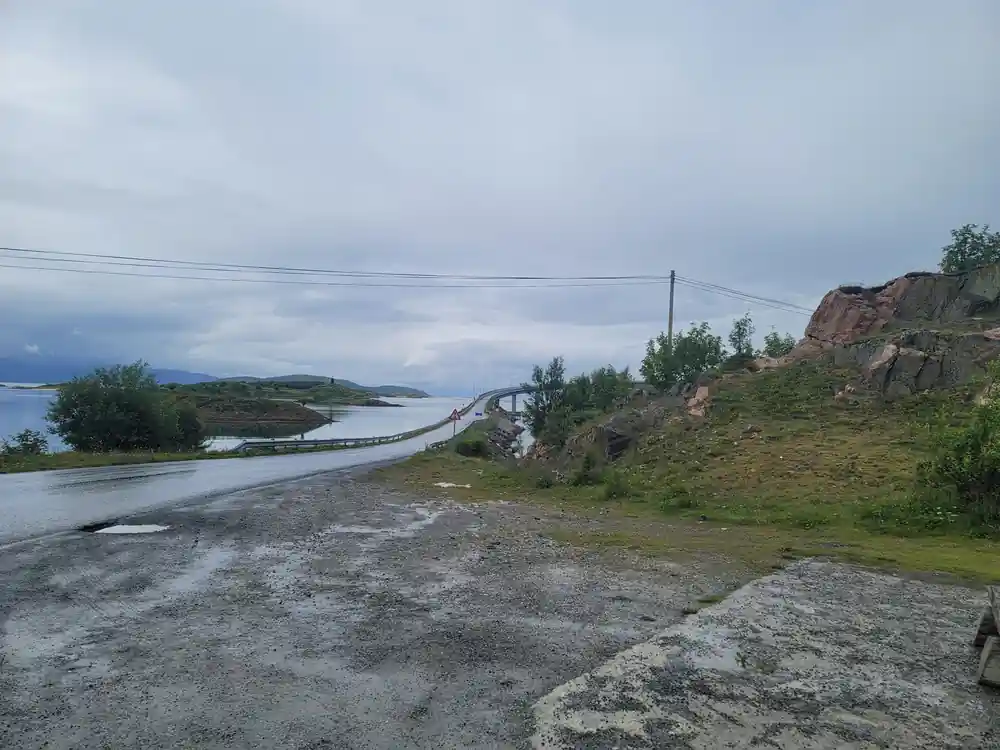
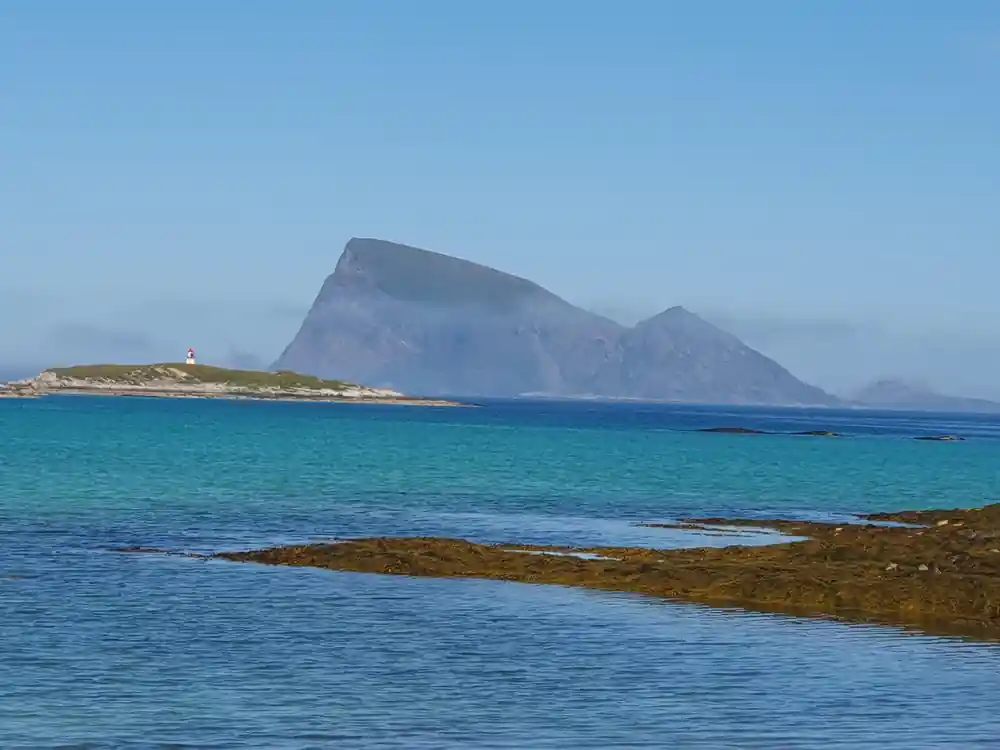
- The route crosses Kvaløya toward Sommarøy, a landscape of fishing villages, turquoise shallows and open fjord water where guides watch for wildlife.
- During winter, orcas and humpback whales congregate in fjords north of Tromsø to eat herring.[2]
- Rated 4.73 from 5,005 reviews on GetYourGuide.[1]
| Sommarøy Fjord Expedition | Fjords Tour | Small Group Kvaløya & Sommarøy | |
|---|---|---|---|
| From | from US$55[1] | from US$121[3] | from US$178[4] |
| Duration | 4.5 hours[1] | 5 hours[3] | 5.5 hours[4] |
| Guide language | English, Spanish[1] | English[3] | English[4] |
| Rating | 4.73 from 5,005 reviews[1] | 4.88 from 639 reviews[3] | 4.86 from 162 reviews[4] |
| Good for | Arctic scenery and salmon picnic | Classic fjord highlights | Smaller group feel and lunch |
During the winter, orcas and humpback whales gather in the area to feed on herring.
A rewarding daylight expedition for wildlife watchers
Know before you leave
What the guides are looking for
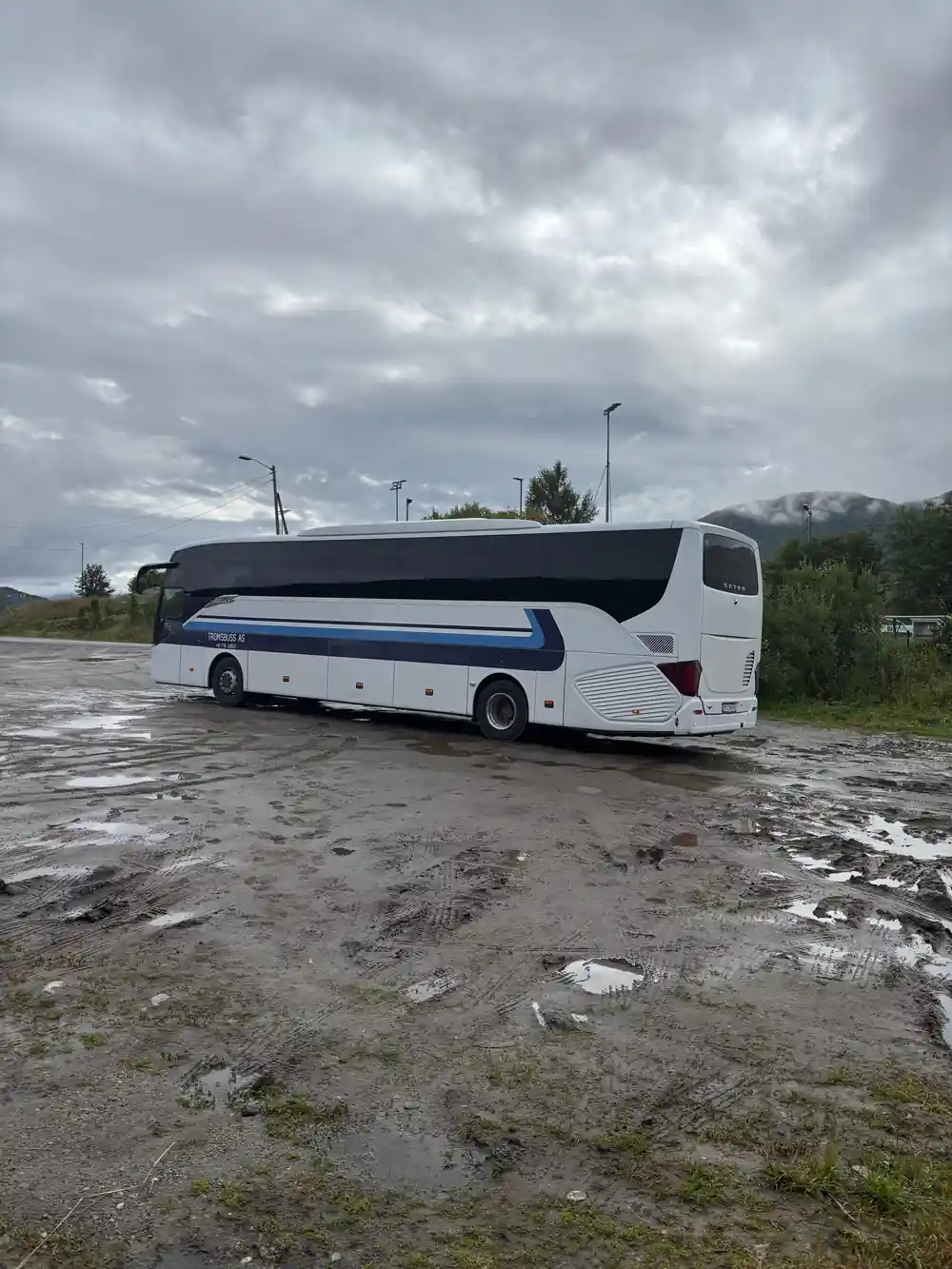
On the Sommarøy Fjord Expedition Tour, your guide is part driver, part naturalist. They scan the shore for movement, check the sky for birds, and keep an eye on the water for fins and splashes. The route crosses the island of Kvaløya, an area of 737 square kilometers and 13,030 inhabitants (2018), including the small island Håkøya.[9] That mix of open fjord, rocky coastline and scattered settlements is exactly where Arctic wildlife appears. Fjord light changes quickly, and animals often show themselves in the first minutes after a stop or around a headland. The guide will pull over where the view opens, switch off the engine and let the quiet do the work.
This is a daylight expedition, so the focus is on the species you can reasonably hope to see: white-tailed sea eagles riding thermals, reindeer grazing near the road, seals lifting their heads in quiet bays, and porpoises breaking the surface. During winter, orcas and humpback whales may also be present in the broader region, gathered to feed on herring.[2] The guides know the regular resting and feeding spots, but they never guarantee an animal will cooperate. You can help by keeping conversation low when the van slows, leaving binoculars within reach, and staying ready with a camera that works in low light. If the group remains patient, the whole search changes from a checklist to a shared experience.
The white-tailed sea eagle
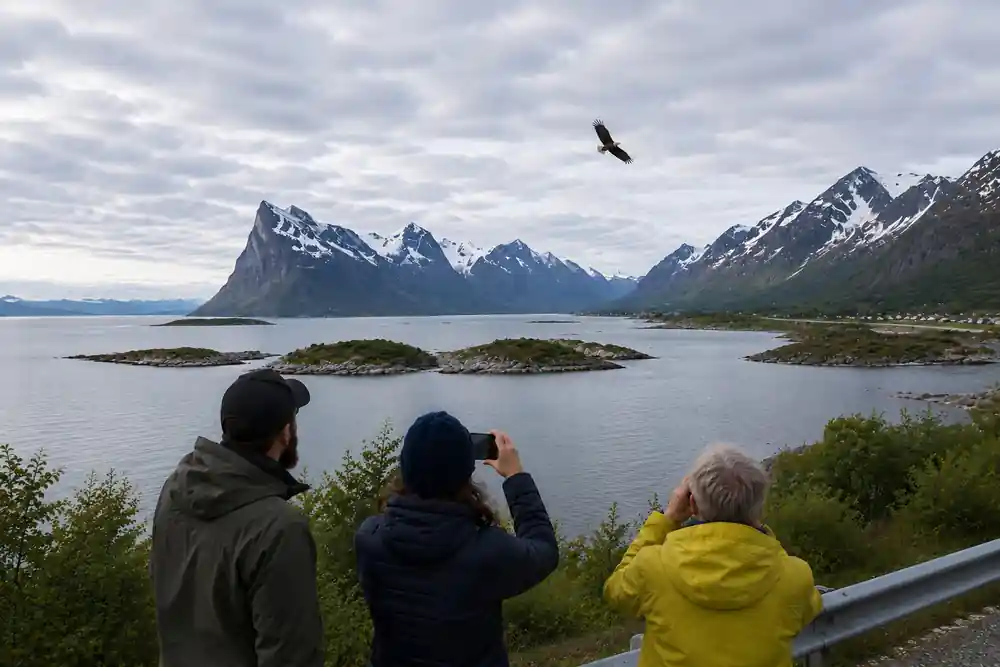
White-tailed sea eagles are one of the great joys of a Tromsø fjord trip. They are massive birds, often seen perched on rocky points or circling above the water. With a good guide, you may learn to spot their pale tails and heavy yellow bills before the bird is obvious to the naked eye. Even when they sit still, their size makes them easy to find against snow, and their slow, deliberate wingbeats are unmistakable. A pair often patrols the same stretch of coast for years, so local guides know exactly where to look.
These eagles are most active when there is food around, so the same herring-rich waters that attract whales in winter also bring seabirds close to shore. Herring head northeast in September/October to wintering grounds along northern Norway's coast and fjords.[10] You do not need to be a birdwatcher to enjoy the moment: the sight of an eagle launching from a snow-dusted rock is pure Arctic theatre. Carry your camera with a fast shutter setting and try to shoot when the bird banks into the wind. That is the moment when the white tail catches the low winter sun and the whole scene looks almost staged.
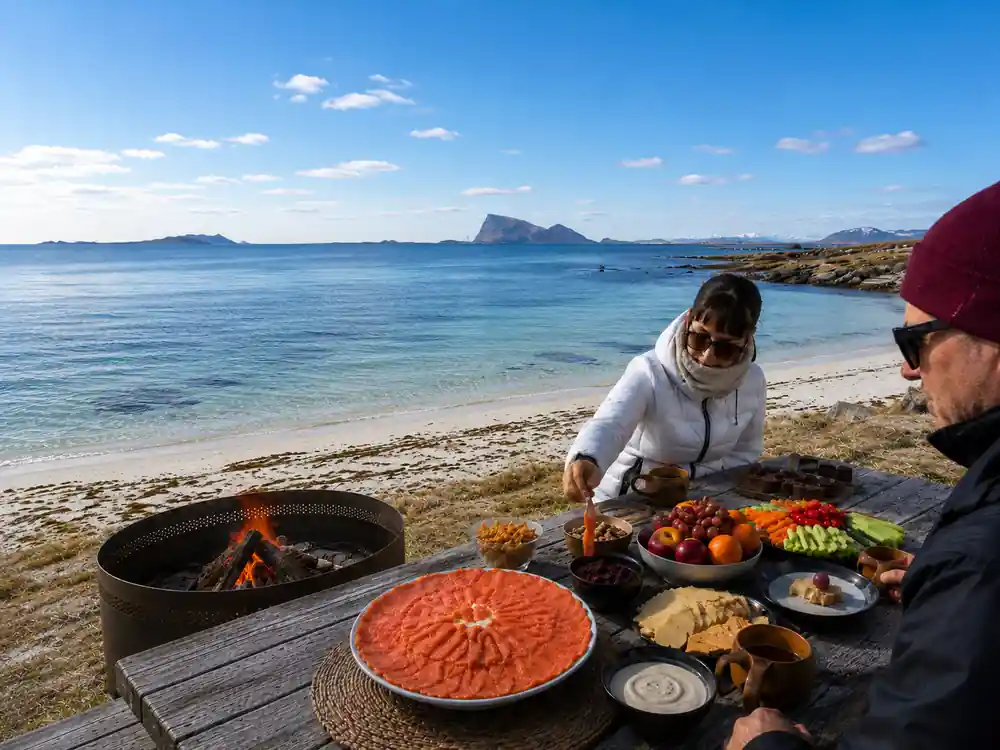
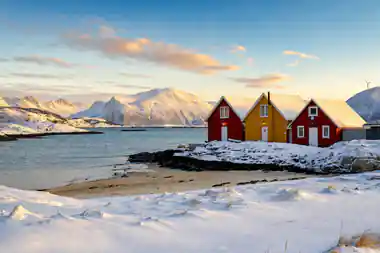
Fishermen's cabins and shallows near Sommarøy on a winter afternoon.
Reindeer, and what semi-domesticated means
Reindeer are common across the Tromsø region, but they are not truly wild in the way many visitors imagine. Most belong to Sámi herding families and are classed as semi-domesticated. They roam freely over large areas, which is why you may see them beside the road or on a distant hillside. In winter their coats thicken and their faces grow pale, and they move to windswept ridges where snow is thin enough for feeding. When a group crosses the road, the whole van waits in silence while the animals pass at their own pace.
On the expedition route, reindeer often appear in small groups, especially in winter when they come down to find food. They can be surprisingly calm around roads, but it is still wise to admire them from a respectful distance. The guide will help you understand how herding works and why these animals move with the seasons. Listen for the clicking sound in their legs, a tendon shift that happens as they walk. It is one of those small details you will remember long after the tour ends.
Moose, the difficult one
Moose are the hardest large animal to predict on this route. They are solitary creatures, most active around dawn and dusk, and they range widely across birch woodland and valleys. A daylight tour can pass through perfect moose habitat and see nothing; another day, one might step calmly out of the trees. They are also much taller than most visitors expect, with long legs built for deep snow. Seeing fresh tracks can be almost as interesting as seeing the animal itself, because the guide can read the story of where it was heading.
When a moose does appear, the tour stops and everyone watches in silence. They are tall, dark and unmistakable. Seeing one is a reminder that wildlife watching is about patience, not checklists. Your guide will point out the kind of terrain where moose like to shelter, which makes even an empty view feel more meaningful. The valleys around Kvaløya hold the right mix of forest and open ground, so keep a lookout near birch thickets and marshy clearings. Winter moose often stay close to roads simply because the snow is shallower there, which explains why drivers see them at the edge of the route.
from US$55
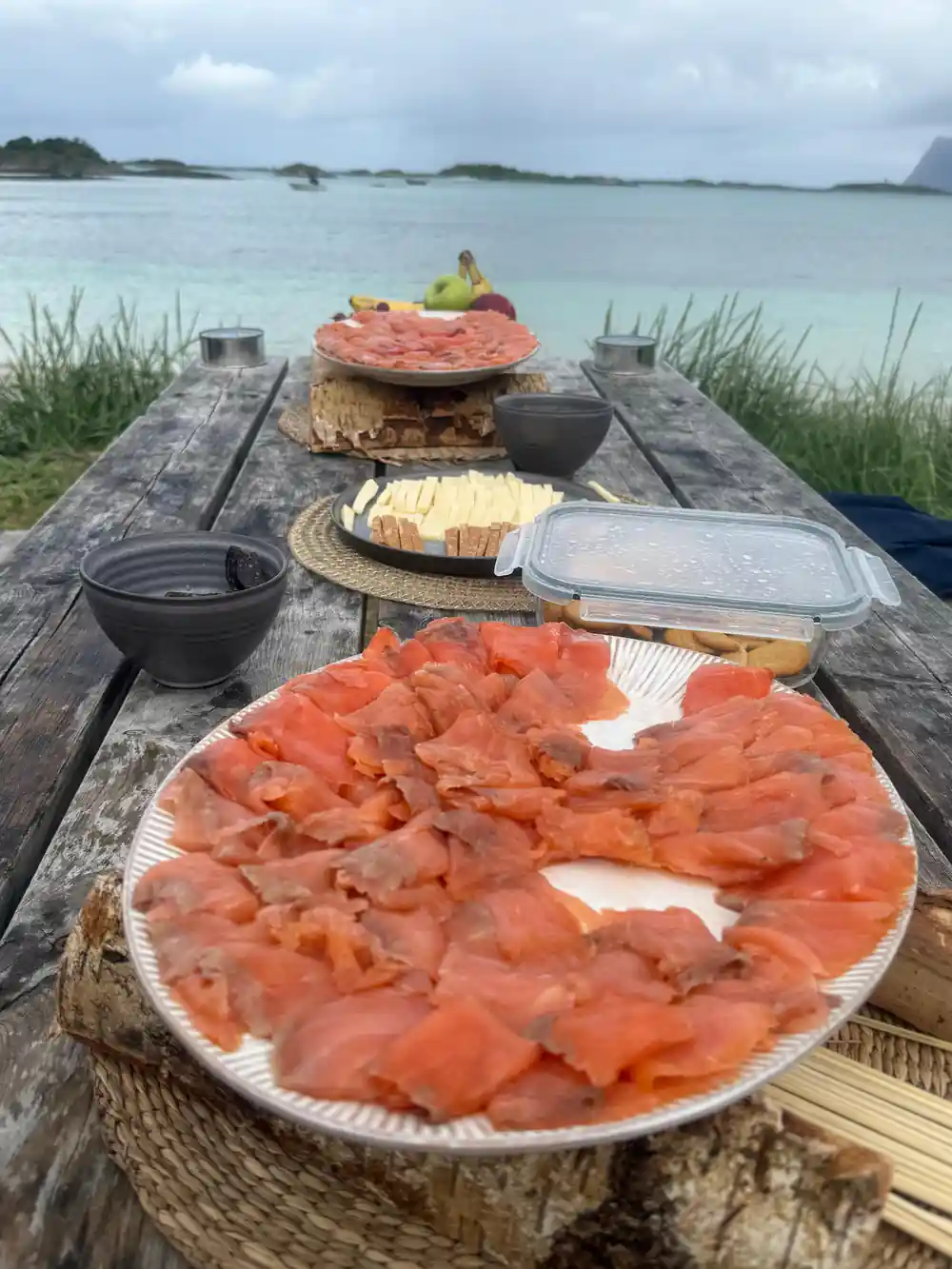
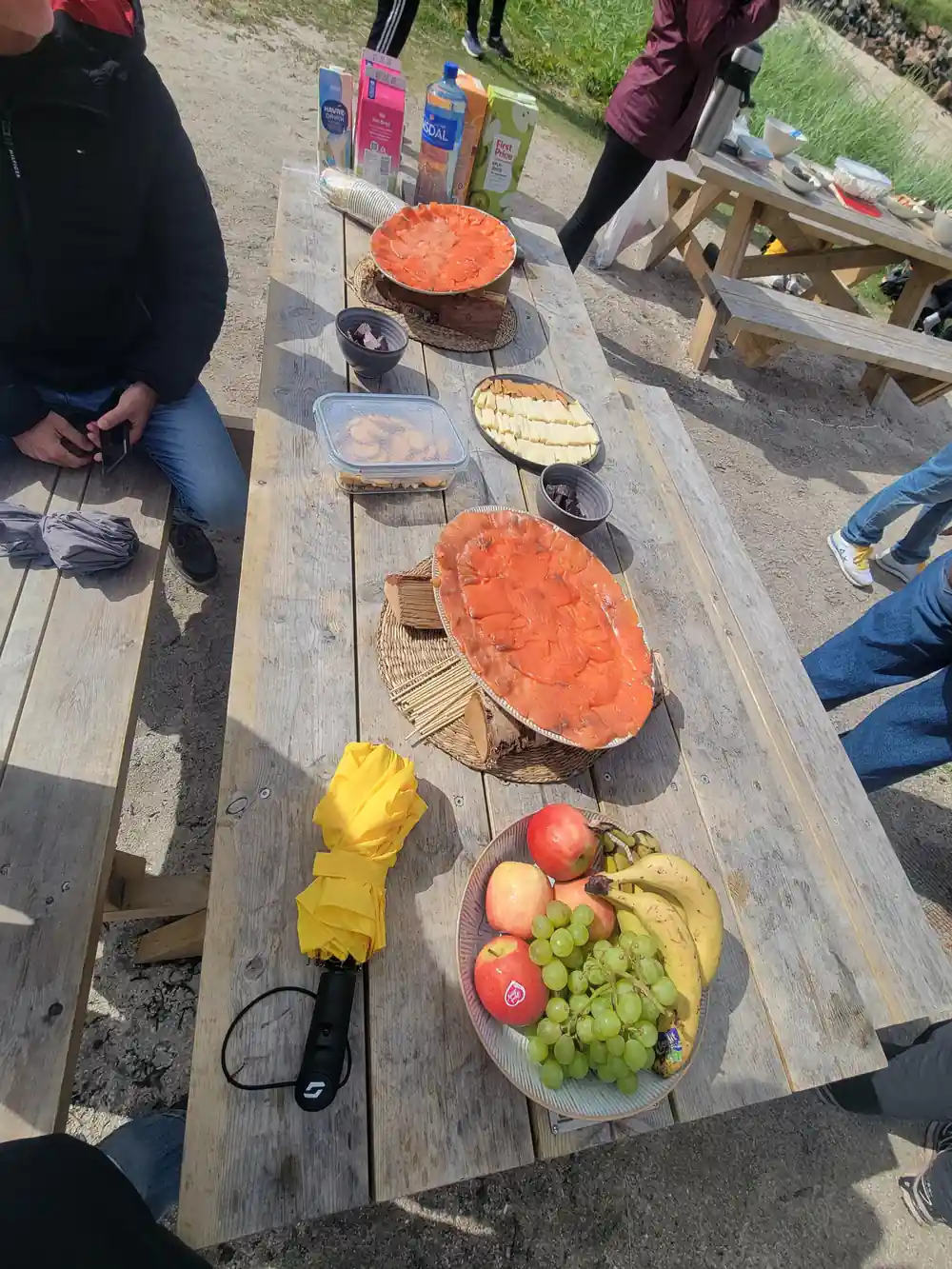
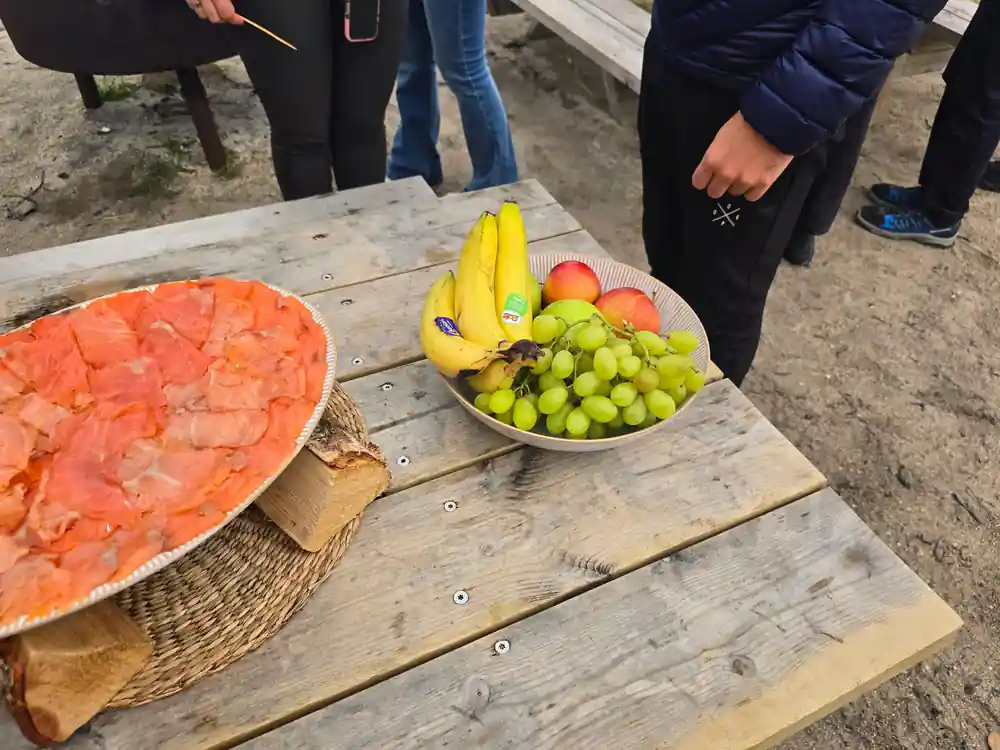
A 4.5-hour[1] expedition from Tromsø to Sommarøy with live guiding, audio guide and a VIP salmon picnic.
Seals and porpoises
The fjords around Tromsø are good places to watch the water for seals and porpoises. Seals haul out on low rocks and sandbanks, often in ones and twos. Porpoises are smaller and quicker, showing a dark dorsal fin for a second before vanishing. Seals tend to be more predictable: if you find a smooth rock near calm water, check again a few minutes later, because the animal may have slipped into the water without splashing. Porpoises are a different matter, often appearing mid-strait and moving at a pace that makes photographs difficult.
Both species can appear anywhere along the route, but sheltered bays and narrow straits are the best places to look. The guide will slow down or pause when something is spotted. Even a distant seal can be a highlight, especially when it dives and the water closes over its head without a ripple. The same current lines that keep herring together also attract predators, so watch where the water changes colour or begins to swirl. That is where a fin is most likely to break the surface.
Why sightings cannot be promised
Animals do not follow itineraries. Weather, wind, light and food movement all affect what you see, and even a perfect day can end with no wildlife at all. That is part of Arctic travel, and no honest operator will tell you otherwise. A calm fjord can feel empty, then suddenly a flock of seabirds will rise from behind a point and the search begins again. The guides accept this uncertainty, which is why they spend more time reading the landscape than promising sightings.
What the tour can promise is a thoughtful route through a remarkable landscape, with a guide who knows where to look and why. The polar night, approximately 27 November to 15 January, leads to winter departures during deep twilight.[11] Late August through early April, northern lights can show in clear skies, but the trip itself is a daytime outing to the water's edge.[12] The light during the polar night is soft and blue, with a long dusk that makes white animals stand out against dark rock. Even without a single sighting, that quality of light is reason enough to be out there.
How to improve your own odds
You can do a lot to help yourself see more. Dress warmly, because winter average temperatures sit around −4°C and a cold traveller spends more time thinking about warmth than wildlife.[5] Keep your camera ready, your window clear, and your eyes moving between shore, sky and water. Choose dark clothing for winter photography, because it reduces reflections in the van window. Bring a spare pair of gloves, because fingers cool quickly when you are holding a lens and waiting for an eagle to move.
Tromsø sits 400 km north of the Arctic Circle at 69°N, and the tour route takes you further along the coast.[13] The midnight sun period from 20 May to 22 July gives extended daylight for summer trips.[7] Ask your guide questions, be patient, and treat every sighting as a gift. That is the best way to enjoy an expedition where the wild decides the schedule. The final stretch back toward Tromsø often passes through changing weather, with clouds rolling over the mountains and light falling on the water in bands. Keep watching until the very last stop.
Daylight fjord tour durations
Compare adult from-prices
Adult from-prices from GetYourGuide listings.[1][3][4]
When to book
Plan your trip
Choose your date
Check availability for the 4.5-hour[1] Sommarøy Expedition; free cancellation applies if you cancel 24 hours or more before the start.[1]
Arrive in Tromsø
Airport to city centre takes 10-20 minutes.[6] The tour departs from Tromsø, so build in time to meet your guide.
Dress for the Arctic
Winter average is −4°C.[5] Warm layers, a windproof outer layer, hat and gloves make the difference.
Watch land and sea
Scan for eagles, reindeer, seals, porpoises and whales. Your guide will point out wildlife and explain what you are seeing.
Ask questions
A live English/Spanish guide[1] and audio guide[1] are included, so use them to go deeper.
Reserve your Sommarøy fjord expedition and keep your options open
from US$55Reserve now & pay later